

Precision care for neuroendocrine tumors.
A simple blood draw. 51 cancer-associated genes. Sensitive RNA technology that helps your doctor determine how to treat your specific tumor — precision medicine.
Rare, rising — and often found late.
Neuroendocrine tumors (NETs) originate from neuroendocrine cells, which have both nerve and hormone-producing properties. Found throughout the body, these cells release hormones in response to signals. NETs can develop in the gastrointestinal tract, pancreas, lungs and other tissues, ranging from slow-growing to aggressive forms; poorly differentiated NETs can metastasize, often to the liver.
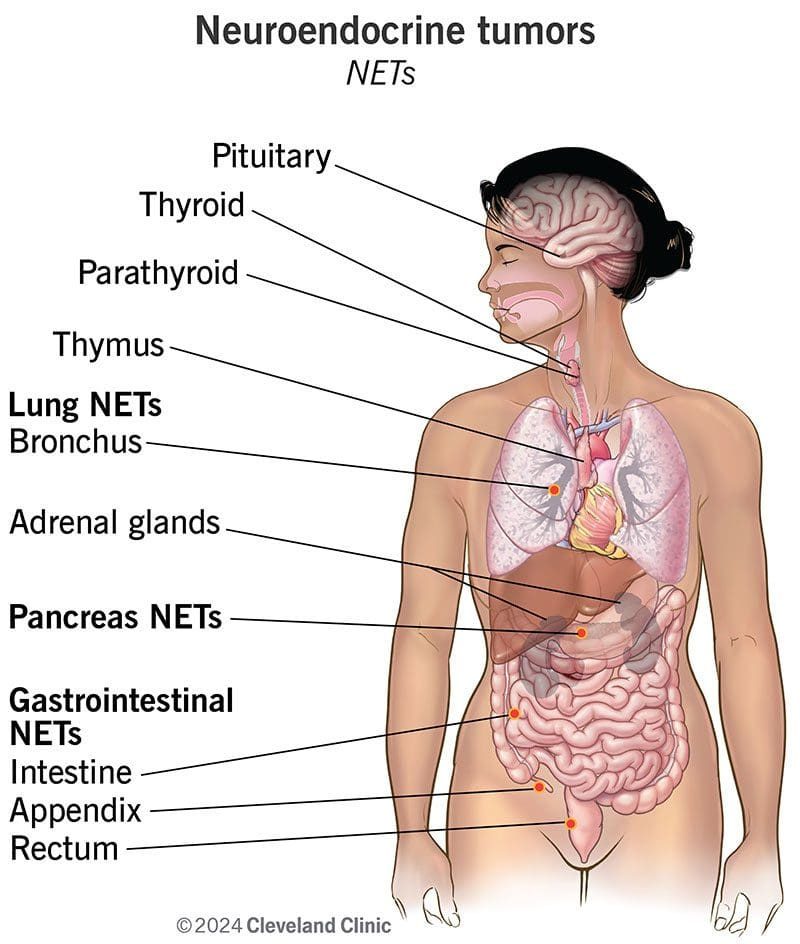
Who gets NETs?
NETs can occur at any age, peaking between 50 and 65. Gastrointestinal NETs may be slightly more common in women and pancreatic NETs in men; racial disparities exist for some types. Most NETs arise sporadically, without a clear cause.
Genetic
Family history (e.g., MEN1, VHL disease).
Environmental
Smoking, chronic gastritis, long-term proton-pump inhibitor use.
Lifestyle
Hormonal imbalances and chronic inflammatory conditions.
50–70% are metastatic at diagnosis.
Diagnosis typically involves imaging (CT, MRI, PET), biopsy and biomarkers such as chromogranin A — but current circulating biomarkers often lack reliability and correlate poorly with treatment response.
Patient management
- Surgery — preferred for localized tumors.
- Medications — somatostatin analogs (e.g., octreotide), targeted therapies (e.g., everolimus), chemotherapy for aggressive cases.
- PRRT — targets tumors with radiolabeled somatostatin analogs.
- Hormonal control — essential for symptoms in functional NETs.
There remains a critical need for validated non-invasive biomarkers for diagnosis, prognosis and treatment monitoring.
One blood draw. 51 genes. A personalized picture.
Wren looks for 51 cancer-associated genes related to neuroendocrine tumors using very sensitive RNA technology — so treatment can be based on your specific tumor and its behavior.
Blood draw
Your doctor takes a very small blood sample.
Sent to Wren
The sample and test order are sent to our laboratory.
RNA analysis
We extract RNA from the sample and run our tests.
Report
Your doctor receives information about the status of your cancer.
Next steps
Your doctor discusses the findings and your care plan with you.
Validated in over 50 third-party studies.
Analytically validated, with demonstrated clinical value in research from top medical institutions.
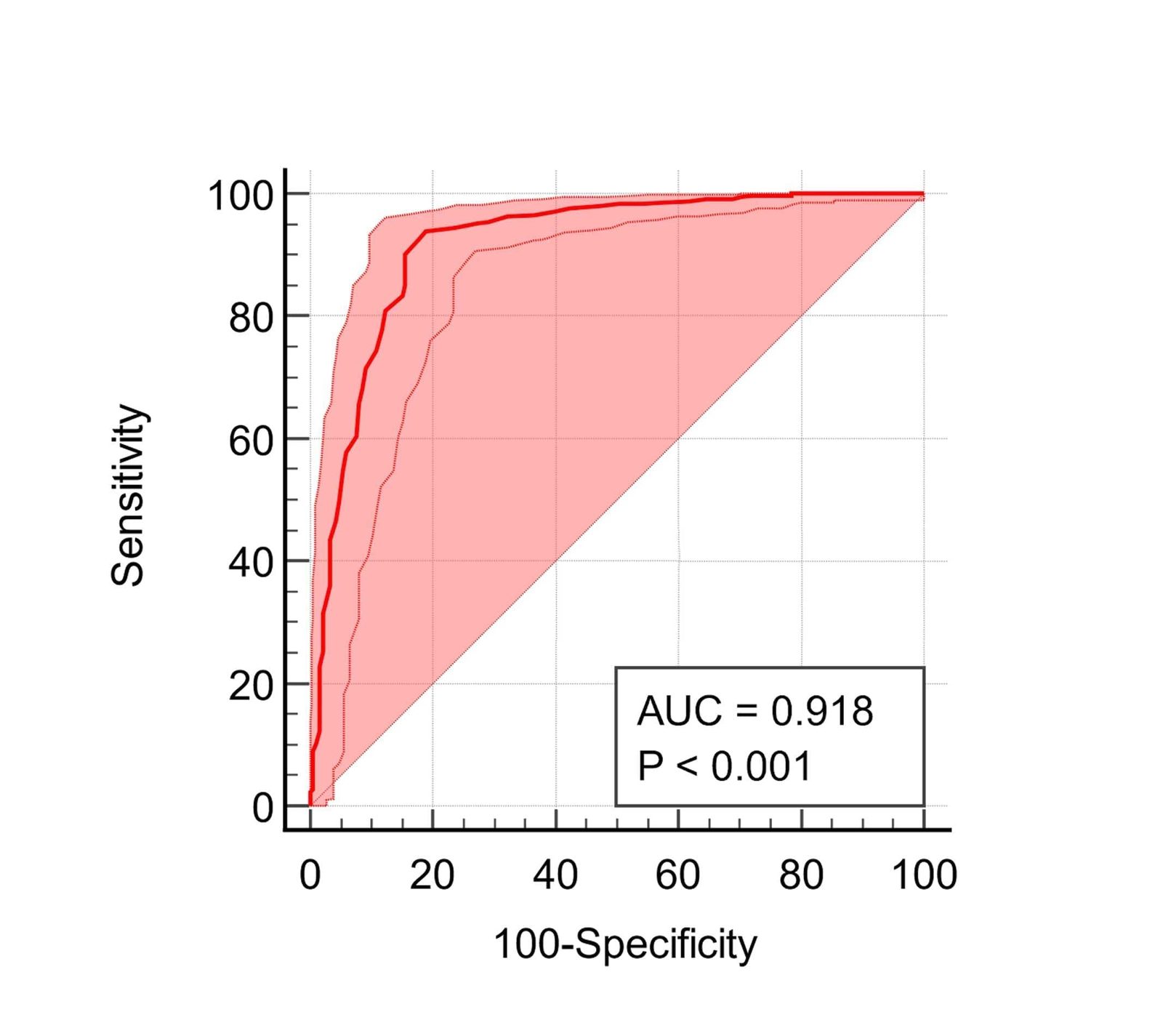
Diagnostic biomarker
94% of patients with a high Diagnostic Score are likely to have a NET, while 90% of those with a low score do not.
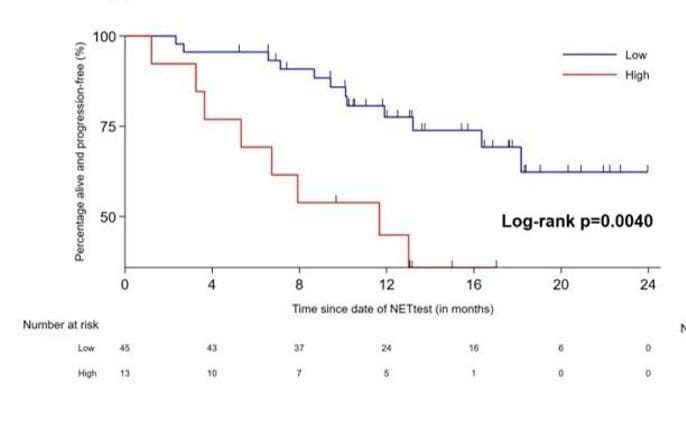
Prognostic insights
High scores carry an 80% chance of tumor progression; low scores a 90% chance of stable disease.
Patient monitoring
Increased scores in serial samples detect minimal residual disease or recurrence in 84% of cases.
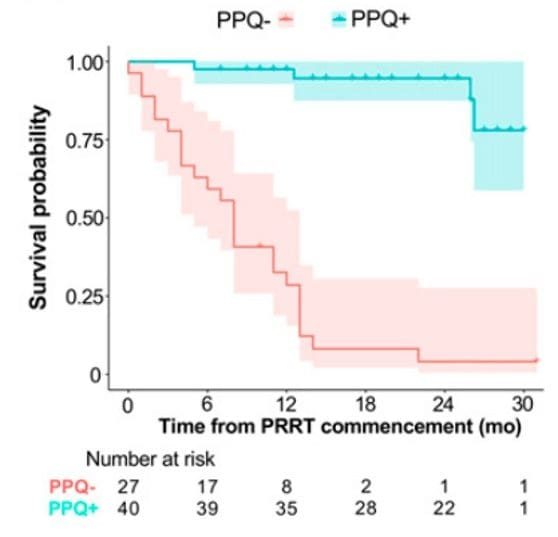
Predictor of treatment response
PPQ-positive patients have a 95% likelihood of benefiting from PRRT (e.g., Lutathera®), vs 10% of PPQ-negative patients.
Three scores. Explore the cutoffs.
NETest 2.0® reports a diagnostic and a prognostic score; the PPQ® predicts response to PRRT. Each runs 0–100 — drag a dial, tap a preset, or press Sweep to see how a score is interpreted at its published cutoff.
NETest 2.0® diagnostic score
InteractiveDRAG THE DIAL · ARROW KEYS · OR TAP A PRESET
Interpretation as printed on Wren’s NETest 2.0 report: scores <50 low likelihood of NET disease; 50–100 high likelihood of NET.
NETest 2.0® prognostic score
InteractiveDRAG THE DIAL · ARROW KEYS · OR TAP A PRESET
Interpretation as printed on Wren’s NETest 2.0 report: scores <40 low risk; scores ≥40 increasing risk of progression or recurrence.
NETest PPQ® score
InteractiveDRAG THE DIAL · ARROW KEYS · OR TAP A PRESET
PRRT Predictive Quotient, 0–100, cutoff 50 (PPQ+ vs PPQ−). Responders show disease stabilization and a longer time to progression after PRRT.
Important limitations
As stated on Wren’s NETest 2.0 report: the NETest was not developed as a screening test and should not be used in the general population. It does not replace imaging or pathology, and should not be used on its own to make treatment-change decisions. It was not developed to differentiate between primary tumor locations, and has not been validated to differentiate high-grade NEN from NEC. It is offered as a laboratory-developed test (LDT) and has not been cleared or approved by the FDA.
Providers, order NETest 2.0®
Order through the portal or download the requisition form.